NVIDIA recently introduced the RTX Spark platform at Computex 2026, bringing the old question of whether ARM could replace x86 back into the spotlight. At first glance, RTX Spark may look like a new CPU. More precisely, though, it is an AI PC SoC platform that combines an ARM CPU, a Blackwell GPU, unified memory, and NVIDIA's CUDA ecosystem. This is not just a processor upgrade. It is one step in NVIDIA's attempt to redesign the personal computer as a local AI workstation.
ARM Is Not a Low-End CPU, but a High-Efficiency Architecture
Many people used to think of ARM as a low-performance CPU architecture for phones. That impression is not entirely wrong, but it is outdated. ARM succeeded in smartphones not because it could only handle light computing, but because it emphasized low power, high efficiency, and a simpler instruction design from the beginning. Phones need long battery life, low heat, and compact hardware, so ARM fit naturally.
The real point is not that ARM is weaker than x86. It is this:
ARM's core advantage is performance per watt: doing similar or sometimes the same work with less power.
Before 2020, the market could be simplified as "x86 for high-performance computers, ARM for phones and embedded devices." Apple M-series chips changed that impression. Apple brought ARM into laptops and desktops, then proved through its own SoC design, unified memory, operating system, and compiler integration that ARM could be power-efficient while still handling complex professional workloads.
What Is an SoC, and Why Does It Matter?
SoC stands for System on Chip. The idea is to integrate multiple core components that used to sit separately on the motherboard into one chip or one tightly connected package.
A traditional PC architecture roughly looks like this:
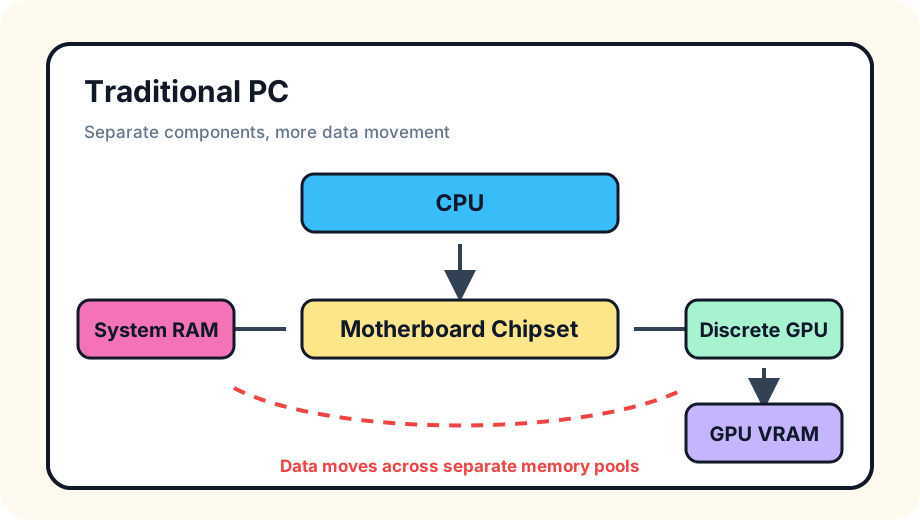
This architecture is flexible and easy to upgrade, but data has to move back and forth among the CPU, GPU, RAM, and VRAM.
An SoC looks more like this:
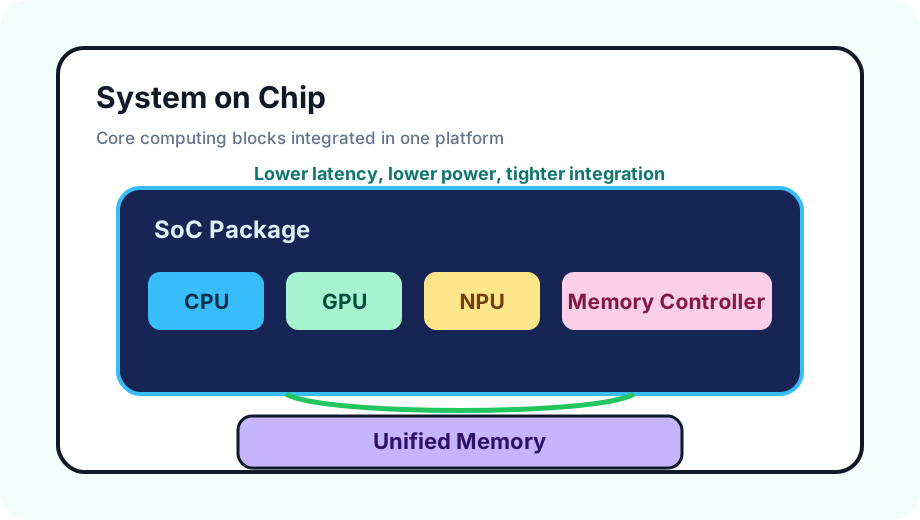
The benefits are lower latency, lower power consumption, and higher integration. Apple's M series is the clearest example of this model. NVIDIA RTX Spark is NVIDIA's attempt to bring a similar logic into the Windows and CUDA ecosystem.
RTX Spark Is Not Just a CPU, but an AI PC Platform
The core concept of RTX Spark is an ARM CPU paired with a Blackwell GPU and a large pool of unified memory. According to NVIDIA's official announcement, RTX Spark features a Blackwell RTX GPU with 6,144 CUDA cores, fifth-generation Tensor Cores with FP4 precision, an NVIDIA Grace 20-core CPU, up to 1 petaflop of AI compute, and 128GB of unified memory for on-device agents.
This is closely related to NVIDIA's earlier DGX Spark. DGX Spark is a personal AI supercomputer for AI developers, built around the GB10 Grace Blackwell Superchip. NVIDIA describes it as a desktop system with 128GB of coherent unified system memory that can work locally with AI models up to 200 billion parameters.
In simple terms, DGX Spark is closer to a desktop AI developer machine, while RTX Spark looks like the attempt to push that idea into a broader Windows PC, laptop, and OEM ecosystem.
Why Is NVIDIA Moving Toward ARM?
NVIDIA's logic is similar to Apple's in one important way: it does not only want to sell GPUs. It wants more control over the platform's core components.
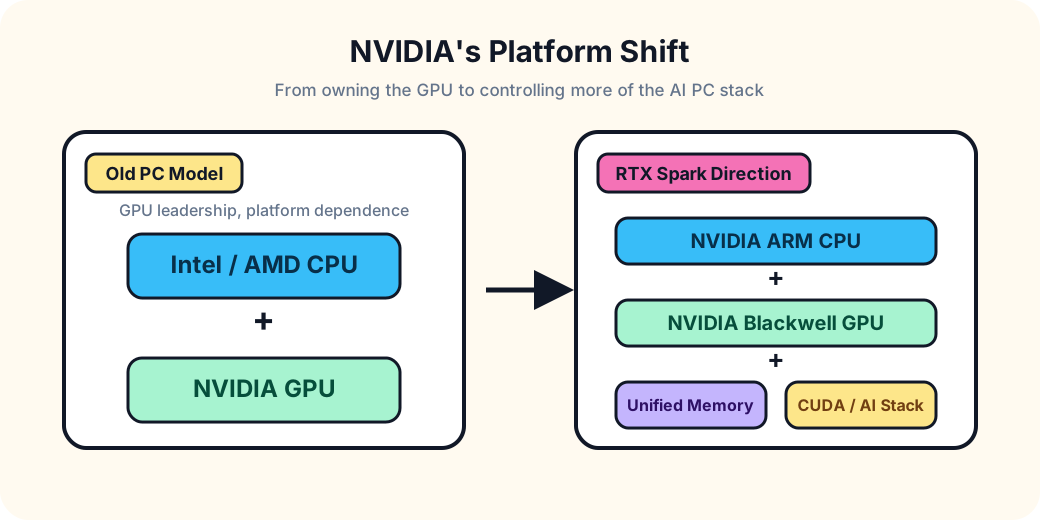
That means NVIDIA controlled the GPU, but the CPU, memory architecture, motherboard platform, and system integration were still shaped by other vendors.
RTX Spark points in a different direction:
This lets NVIDIA act more like Apple by integrating hardware and software vertically. The difference is that Apple's target is general consumer and creator computing, while NVIDIA's focus is AI development, AI agents, local model inference, and the CUDA ecosystem.
In the AI Era, the CPU Becomes a Coordinator
In the traditional PC era, the CPU was the main character. Office apps, browsers, enterprise software, database tools, and compilation work often depended heavily on CPU performance.
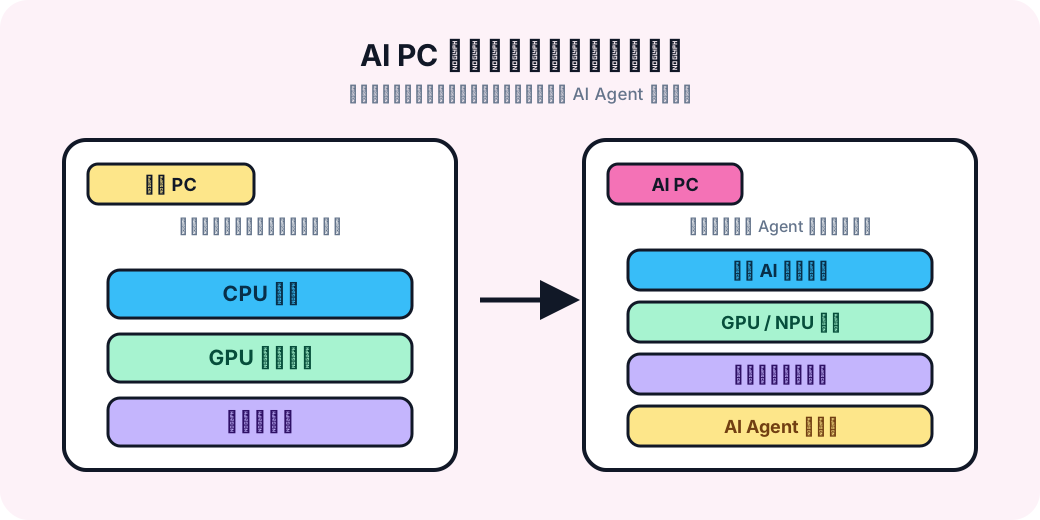
AI workloads change that balance. Large language models, image generation, speech models, and AI agents usually place most of the compute pressure on the GPU. The CPU's role becomes more like data scheduling, system management, I/O, and task coordination rather than raw compute leadership.
That is why NVIDIA using an ARM CPU is not surprising. For an AI PC, the CPU does not necessarily need to be a high-power x86 processor. As long as it can feed data and manage workflows effectively, the heavy work can move to the Blackwell GPU.
The key idea is:
In an AI PC, the CPU is not always the main character anymore. The GPU and memory architecture are the real bottlenecks.
The Real Advantages of ARM Over x86
ARM's advantage is not simply that it is faster. It is better suited to highly integrated, low-power, SoC-style designs.
Its strengths can be summarized in four points.
First is energy efficiency. ARM can often deliver good performance at lower power, which matters for laptops, mini PCs, and AI PCs. When a device needs to run AI agents or local models for long periods, power and thermals directly affect the experience.
Second is integration. ARM's licensing model makes it easier for companies to design their own SoCs. Apple can build M-series chips, Qualcomm can build Snapdragon X, and NVIDIA can build Grace or RTX Spark-style integrated platforms.
Third is unified memory. For AI models, memory capacity and bandwidth are critical. Traditional PCs separate CPU RAM and GPU VRAM, which can quickly run into VRAM limits. Unified memory lets the CPU and GPU access one larger shared memory pool, which is attractive for large-model inference.
Fourth is platform control. For NVIDIA, adopting ARM means it can more freely design the relationship among CPU, GPU, memory, and software stack instead of always depending on Intel or AMD platform cycles.
Is x86 Really Stronger?
It is not that simple.
x86 remains powerful, especially in desktops, servers, gaming, and enterprise environments. It has decades of software compatibility, mature development tools, broad driver support, and a huge base of commercial applications optimized for x86.
Windows being large and complex is also not entirely x86's fault. Windows feels heavy partly because it carries long-term business compatibility. Enterprises expect old software, old drivers, and old systems to keep working. That makes it difficult for Windows to remove legacy layers as aggressively as iOS or macOS can.
Microsoft has invested in Windows on Arm for years, from Windows RT and Surface Pro X to Snapdragon X and Copilot+ PCs. This shows that Microsoft does not want Windows to stay permanently tied to x86. However, Windows on Arm can still face app, driver, and peripheral compatibility differences. Microsoft's official FAQ also reminds users that some software and peripheral experiences can vary on ARM-based Windows PCs.
So a more accurate summary is:
x86's advantage is compatibility and a mature ecosystem. ARM's advantage is efficiency, integration, and platform flexibility for future AI PCs.
The Real Meaning of RTX Spark
The most important thing about RTX Spark is not that NVIDIA made an ARM CPU. It is that NVIDIA is trying to redefine the personal computer.
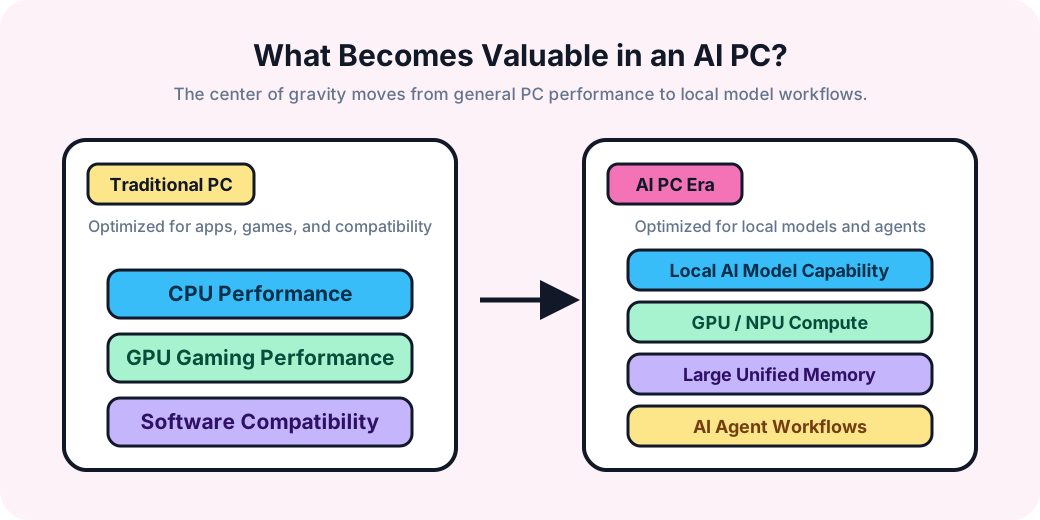
NVIDIA showed RTX Spark at Computex 2026 and has already positioned it alongside later Rubin, Rosa, and Feynman generations. That suggests this is not a one-off product, but a long-term platform strategy.
If Apple's M series was the first major success story of ARM entering high-performance personal computers, RTX Spark may become an important starting point for ARM plus CUDA entering AI PCs.
Conclusion: ARM Is Not Replacing x86, but Redividing the Work
The competition between ARM and x86 should not be reduced to which one is stronger. A better view is that they are moving toward different roles: x86 will continue to dominate many traditional desktops, gaming PCs, enterprise systems, and servers, while ARM keeps expanding in laptops, AI PCs, edge computing, local AI workstations, and highly integrated SoC devices. Its advantage is not brute-force performance, but doing increasingly complex work with lower power and higher integration.
RTX Spark shows that NVIDIA sees a new opportunity. When AI workloads depend mainly on GPUs, the CPU no longer has to be played by x86 forever. Future personal computers may become less about "the CPU runs applications" and more about "the GPU runs models, AI agents operate the system, and the CPU coordinates the workflow." That is what makes ARM, SoC, Unified Memory, and RTX Spark worth watching together.
References
NVIDIA 近期在 Computex 2026 發表 RTX Spark 平台,讓「ARM 架構是否會取代 x86」這個老問題重新被拿出來討論。表面上看,RTX Spark 像是一顆新的 CPU;但更精準地說,它是一個面向 AI PC 的 SoC 平台,整合了 ARM CPU、Blackwell GPU、統一記憶體與 NVIDIA 的 CUDA 生態系。這不是單純的處理器升級,而是 NVIDIA 嘗試把個人電腦重新設計成「本地 AI 工作站」的一步。
ARM 不是低階 CPU,而是高能效架構
過去很多人把 ARM 理解成「手機用的低效能 CPU」,這個印象不完全錯,但已經過時。ARM 之所以在手機市場成功,不是因為它只能做低階運算,而是因為它一開始就很重視低功耗、高效率與簡潔的指令設計。手機需要長續航、低發熱、小體積,因此 ARM 架構剛好非常適合。
真正的關鍵不是「ARM 比 x86 弱」,而是:
ARM 的核心優勢是每瓦性能,也就是用更少的電完成接近甚至相同的工作。
在 2020 年以前,市場大致可以簡化成「x86 負責高效能電腦,ARM 負責手機與嵌入式設備」。但 Apple M 系列晶片改變了這個印象。Apple 把 ARM 架構帶進筆電與桌機,並透過自家 SoC、統一記憶體、作業系統與編譯器整合,證明 ARM 不只可以省電,也能處理複雜的專業工作。
SoC 是什麼?為什麼它重要?
SoC 是 System on Chip,中文常翻成「系統單晶片」。它的概念是把原本分散在主機板上的多個核心元件整合到同一顆晶片或同一套封裝裡。
傳統 PC 架構大致是:
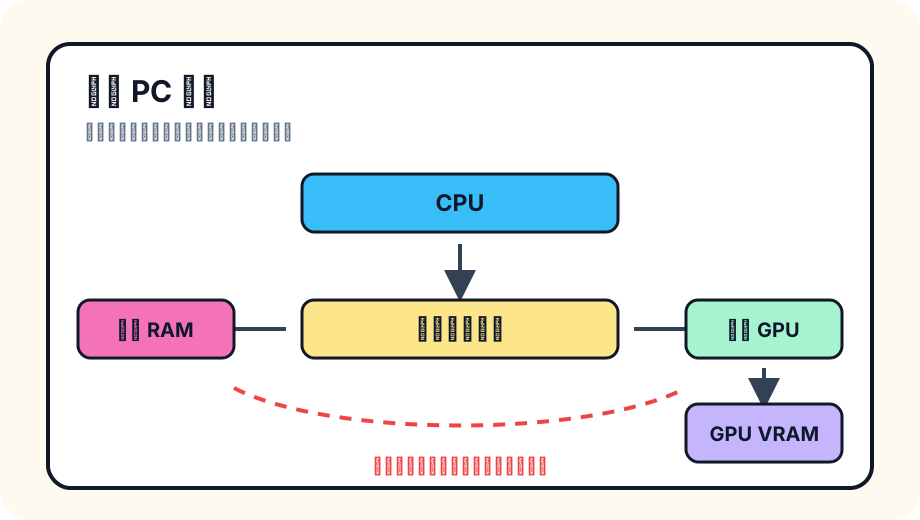
這種架構彈性高,也方便升級,但資料需要在 CPU、GPU、RAM、VRAM 之間來回搬移。
SoC 則更像:
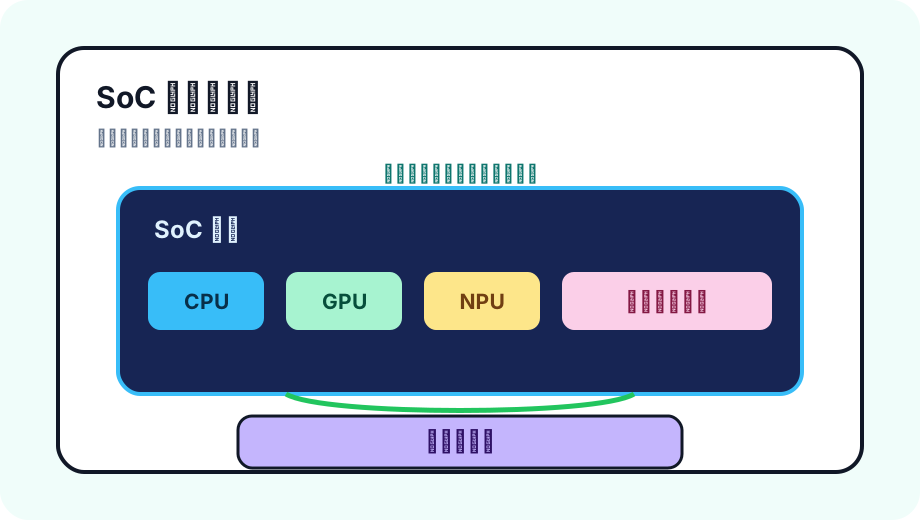
好處是延遲更低、功耗更低、整合度更高。Apple M 系列是這個模式的代表,而 NVIDIA RTX Spark 則是 NVIDIA 試圖把類似邏輯帶進 Windows 與 CUDA 生態系。
RTX Spark 不是單純的 CPU,而是 AI PC 平台
RTX Spark 的核心概念是 ARM CPU 加上 Blackwell GPU,再搭配大容量統一記憶體。根據 NVIDIA 官方新聞稿,RTX Spark 採用 Blackwell RTX GPU、6,144 個 CUDA 核心、支援 FP4 精度的第五代 Tensor Cores、20 核 NVIDIA Grace CPU,並提供最高 1 petaflop AI 算力與 128GB 統一記憶體,目標是支援本地 AI Agent、創作工作流與大型模型推論。
這跟 NVIDIA 先前推出的 DGX Spark 有明顯關聯。DGX Spark 是定位給 AI 開發者的個人 AI 超級電腦,採用 GB10 Grace Blackwell Superchip。NVIDIA 官方資料標示,它配備 128GB coherent unified system memory,可在桌面環境處理最高 200B 參數等級的 AI 模型開發與測試工作。
簡單說,DGX Spark 比較像「桌上型 AI 開發機」,RTX Spark 則像是把這套思路推向更廣泛的 Windows PC、筆電與 OEM 生態。
為什麼 NVIDIA 也走向 ARM?
NVIDIA 的邏輯跟 Apple 有相似之處:它不只想賣 GPU,而是想控制更多平台核心元件。
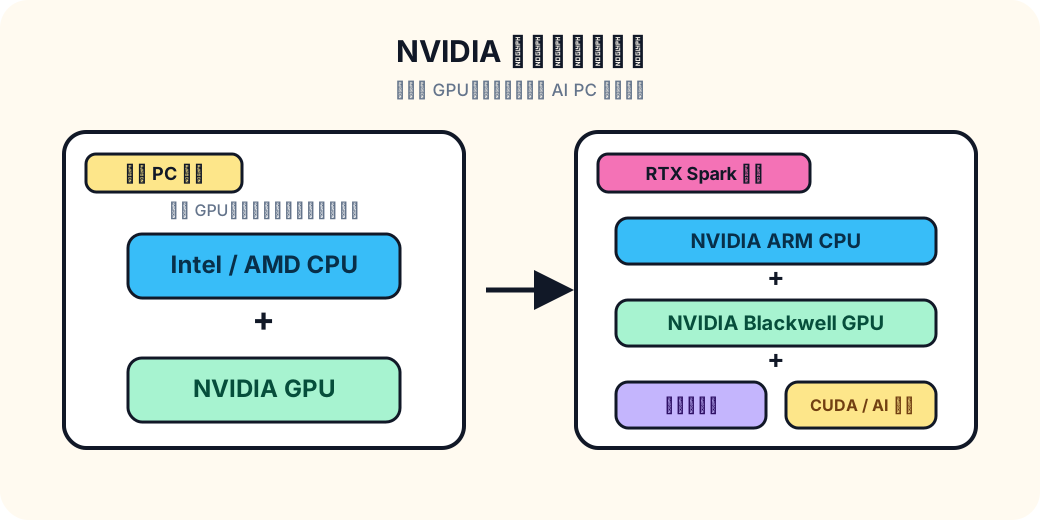
這代表 NVIDIA 雖然掌握 GPU,但 CPU、記憶體架構、主機平台與系統整合仍然受限於其他廠商。
RTX Spark 的方向則是:
這讓 NVIDIA 可以更像 Apple 一樣,從硬體到軟體做垂直整合。不同的是,Apple 的目標是一般消費與創作電腦,而 NVIDIA 的重點是 AI 開發、AI Agent、本地模型推論與 CUDA 生態系。
AI 時代,CPU 從主角變成協調者
在傳統 PC 時代,CPU 是整台電腦的主角。Office、瀏覽器、企業軟體、資料庫工具、編譯工作,很多都高度依賴 CPU。
但在 AI 工作負載裡,情況不同。大型語言模型、影像生成、語音模型與 AI Agent 的主要運算壓力通常落在 GPU。CPU 的角色比較像是負責資料調度、系統管理、I/O 與任務協調,而不是主要算力來源。
這也是為什麼 NVIDIA 使用 ARM CPU 並不奇怪。對 AI PC 來說,CPU 不一定要用最高功耗的 x86 處理器;只要它能有效餵資料、管理工作流,真正的重活可以交給 Blackwell GPU。
這句話很關鍵:
在 AI PC 裡,CPU 不再一定是主角;GPU 與記憶體架構才是瓶頸核心。
ARM 相較 x86 的真正優勢
ARM 的優勢不是單純「比較快」,而是更適合高整合、低功耗與 SoC 化設計。
它的主要優勢可以整理成四點。
第一是能效。ARM 通常能在較低功耗下提供不錯的效能,這對筆電、迷你主機、AI PC 都很重要。當設備需要長時間執行 AI Agent 或本地模型時,功耗與散熱會直接影響體驗。
第二是整合度。ARM 授權模式讓廠商更容易設計自己的 SoC。Apple 可以做 M 系列,Qualcomm 可以做 Snapdragon X,NVIDIA 也可以做 Grace 或 RTX Spark 這類整合平台。
第三是統一記憶體設計。對 AI 模型來說,記憶體容量與頻寬非常重要。傳統 PC 的 CPU RAM 和 GPU VRAM 分離,容易遇到 VRAM 不夠的問題。統一記憶體架構則能讓 CPU 與 GPU 存取同一大池記憶體,對大型模型推論很有吸引力。
第四是平台控制權。對 NVIDIA 來說,採用 ARM 代表它可以更自由地設計 CPU、GPU、記憶體與軟體堆疊之間的關係,而不是永遠依賴 Intel 或 AMD 的平台節奏。
那 x86 真的比較強嗎?
不能這樣簡化。
x86 的優勢仍然很強,尤其是在桌機、伺服器、遊戲與企業環境。它有數十年的軟體相容性、成熟的開發工具、廣泛的驅動支援,以及大量針對 x86 最佳化的商業應用。
Windows 的龐大與複雜,也不能全怪 x86。Windows 之所以顯得「壅腫」,更大原因是它背負了長期商業相容性。企業希望舊軟體、舊驅動、舊系統能繼續運作,這讓 Windows 很難像 iOS 或 macOS 那樣大刀闊斧砍掉歷史包袱。
Microsoft 確實已經投入 Windows on Arm 很多年,從 Windows RT、Surface Pro X,到後來的 Snapdragon X 與 Copilot+ PC,都可以看出 Microsoft 不想讓 Windows 永遠綁死在 x86 上。不過 Windows on Arm 仍然會遇到應用程式、驅動與周邊相容性問題,Microsoft 官方 FAQ 也提醒 ARM 裝置在部分軟體與周邊使用上可能有差異。
所以更準確的說法是:
x86 的優勢是相容性與成熟生態;ARM 的優勢是能效、整合與未來 AI PC 的平台彈性。
RTX Spark 的真正意義
RTX Spark 最值得注意的地方,不是「NVIDIA 做了一顆 ARM CPU」,而是 NVIDIA 正在嘗試重新定義個人電腦。
NVIDIA 在 Computex 2026 展示 RTX Spark,並且已經規劃後續 Rubin、Rosa、Feynman 等世代,代表這不是一次性產品,而是長期平台戰略。
如果 Apple M 系列是「ARM 架構進入高效能個人電腦」的第一個成功範例,那 RTX Spark 可能是「ARM 加 CUDA 進入 AI PC」的重要起點。
結論:ARM 不是取代 x86,而是重新分工
ARM 和 x86 的競爭,不應該被簡化成誰比較強。更合理的看法是,兩者正在走向不同定位:x86 仍會繼續主導大量傳統桌機、遊戲 PC、企業系統與伺服器環境;ARM 則會在筆電、AI PC、邊緣運算、本地 AI 工作站與高度整合的 SoC 裝置中持續擴張。它的優勢不是暴力效能,而是用更低功耗、更高整合度,完成越來越複雜的工作。
RTX Spark 的出現,代表 NVIDIA 看見了一個新的機會:當 AI 工作負載主要依賴 GPU,CPU 不再需要永遠由 x86 扮演主角。未來的個人電腦,可能不再只是「CPU 跑應用程式」,而是「GPU 跑模型、AI Agent 操作系統、CPU 負責協調」。這才是 ARM、SoC、Unified Memory 和 RTX Spark 放在一起時,真正值得注意的地方。